

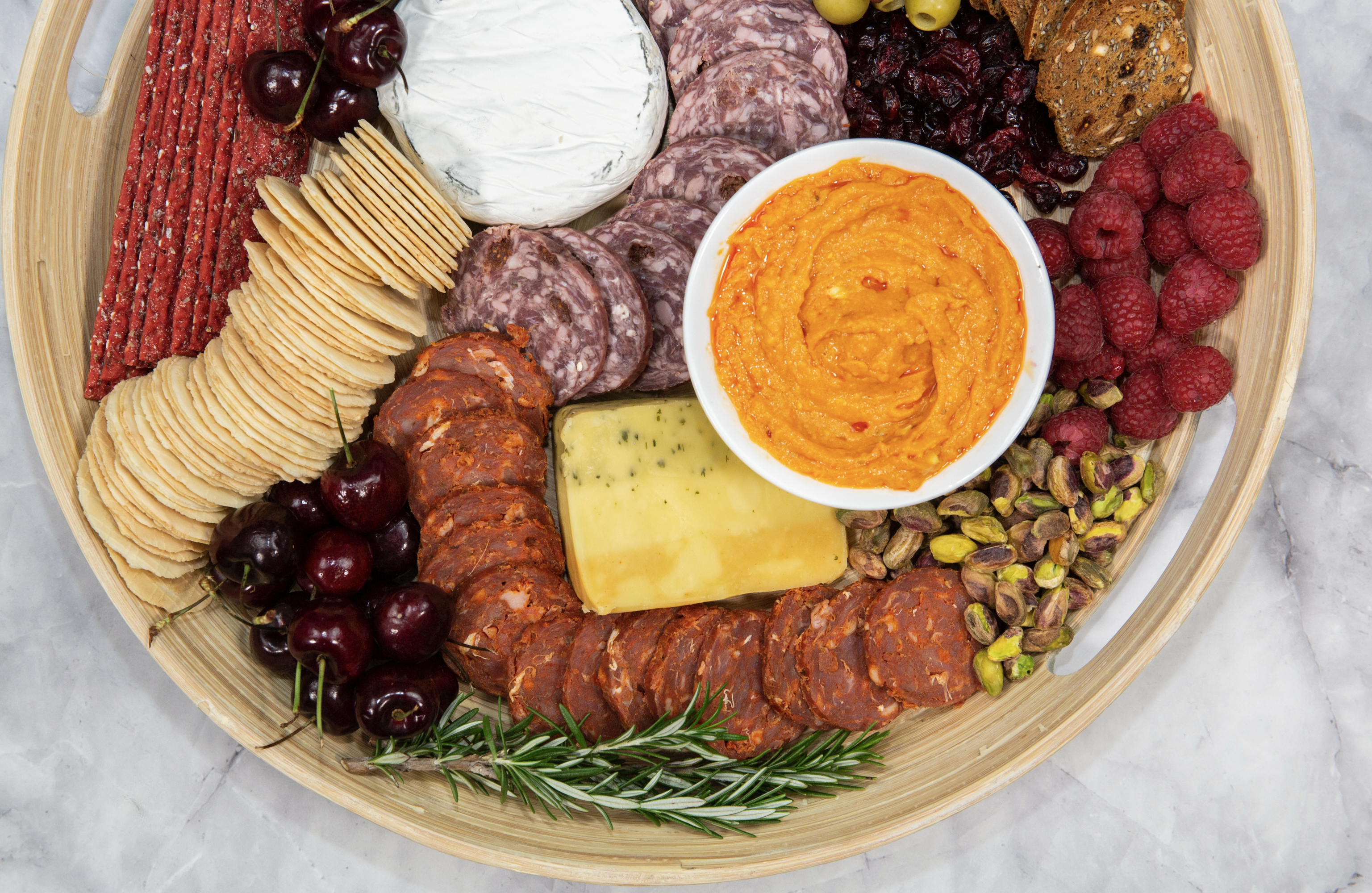
When you want a platter that doesn't just sit on the table but actually steals the show, you need to elevate your components. The easiest shortcut to an elite board? Upgrade your cured meats.
By swapping out mass-produced fillers for rich, complex, and distinctive small-batch salami, you instantly give your guests something worth talking about. Here is exactly how to build a better board by layering texture, character, and regional flavour profiles.
1. Ditch the Mono-Meat (The Power of Three)
The biggest mistake people make is buying three packages of the exact same style of meat. A truly great charcuterie layout relies on contrast. Aim for a trio of distinct flavor profiles:
-
The Aromatic Classic: Start with something deeply traditional but high-quality, like a Pork Fennel & Garlic salami. The aniseed notes of the fennel cut through fat beautifully, providing a bright, clean baseline for your board.
-
The Smoky & Deep: Introduce a heavier, robust profile. A premium Chorizo rich with smoked paprika, or a decadent Pork & Truffle salami, grounds the board with an intense, earthy umami that makes cheap crackers taste expensive.
-
The Wildcard: Give your guests an experience they won't find on a standard party platter. Introduce a lean, gamey option like a rich Venison or a native-infused Tasmanian Pepper Berry salami. It acts as an instant conversation starter.
2. Think Beyond the Round Slice
Visual texture is just as important as taste. If every piece of charcuterie is sliced paper-thin and laid flat, the board looks flat. Vary your cutting techniques to create a dynamic, irresistible topography:
-
The Baton: Cut a chunk of a firm log, like a traditional Saucisson into thick matchsticks or batons. This gives a satisfying, meaty chew that pairs beautifully with hard cheeses.
-
The Coin: Slice a medium-diameter roll like Calabrese on a sharp diagonal. Slicing on the bias creates elegant, elongated ovals rather than perfect school-lunch circles.
-
The Rough Tear: For wider, softer varieties like a spiced Pepperoni, drape or ruffle the slices loosely onto the board rather than pinning them down flat.
3. The Accompaniment Math
Once you've selected your premium meats, the rest of the board should be built to complement them, not crowd them out. Follow this simple balancing formula:
|
Element |
The Perfect Counterpart |
Why it Works |
|
Rich/Faty Meats (e.g., Pork & Truffle) |
Cornichons, pickled onions, or green olives. |
Sharp acidity cuts right through the rich fat, resetting your palate. |
|
Spicy Meats (e.g., Chilli Bomb, Calabrese) |
Hot honey, fresh grapes, or dried figs. |
Sweetness tames the lingering capsaicin heat without masking the spices. |
|
Lean/Game Meats (e.g., Kangaroo, Venison) |
Creamy brie, camembert, or whipped chèvre. |
The buttery, velvety texture of soft cheese balances the dense, lean structure of game meat. |
The Golden Rule: Let it Breathe
Just like a fine red wine, artisan cured meats are at their absolute worst when served straight out of a freezing fridge. Cold masks the intricate spices and hardens the natural fats.
Pull your salami out of the fridge at least 20 to 30 minutes before serving. As it warms to room temperature, the fats will begin to glisten slightly, softening the texture and unlocking the full, complex aroma of the spices.
Step away from the supermarket deli aisle, pick your flavours with intention, and let the craftsmanship do the talking. Your guests will thank you.


